
Asbury Park High School Builds Workforce-Ready Career Pathways
Summary
Asbury Park High School improved attendance and student engagement through Gameplan’s career-connected learning curriculum. Using Careers in Gaming, students developed skills in media production, game design, communication, and collaboration while exploring future careers in creative technology. Teachers reported stronger participation, better classroom behavior, and increased motivation, while school leaders connected the program to workforce readiness and local industry opportunities in New Jersey.
A school focused on workforce readiness: Asbury Park
Location: New Jersey | Grades: 9-12 | Type: High School | Size: 370
Asbury Park High School sits in the heart of Asbury Park, New Jersey, a city known for its deep cultural and creative roots. The school serves a student population that is primarily Latino and African American and focuses heavily on creating meaningful opportunities for students both inside and outside the classroom.
For Dr. Perry Medina, Principal of Asbury Park High School, the goal is clear: help students graduate with the skills, confidence, and exposure needed to succeed in the real world.
That goal pushed the school to look for a better way to connect student interests with workforce-ready learning opportunities.
Instead of treating student interest in gaming and media as a distraction, Asbury Park chose to use it as an entry point into communication, design, technology, and career exploration.
Meet the educators driving student engagement
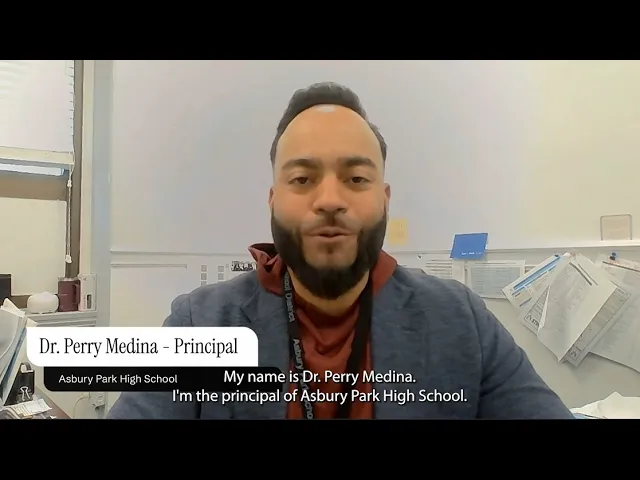
Dr. Perry Medina, Principal of Asbury Park High School
Dr. Perry Medina has spent eight years in the district and describes Asbury Park students as creative, driven, and resilient.
“At Asbury Park, we focus on giving students the opportunities they need to thrive and succeed beyond graduation.”
For Dr. Medina, career-connected learning was about creating stronger pathways into future careers while improving engagement and participation across the school.
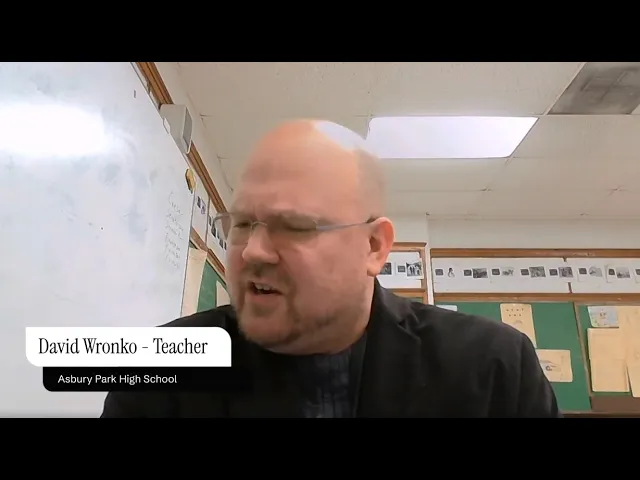
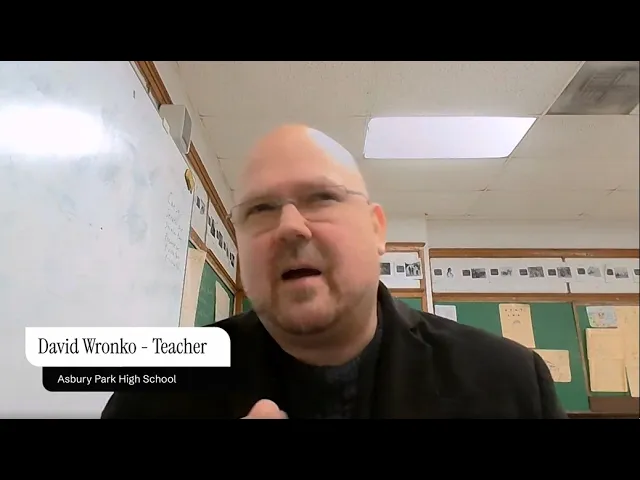
David Wronko, Social Studies Teacher
David Wronko has taught social studies at Asbury Park High School for 22 years. When the school introduced Careers in Gaming through Gameplan, he stepped into an entirely new teaching space.
He did not come from a gaming or technical background. What he brought was years of classroom experience and a strong understanding of student engagement. Gameplan gave him the structure and flexibility needed to confidently teach a new subject while connecting it back to real-world skills and project-based learning.
“After 22 years teaching history, I was looking for new ways to engage my students. I don’t come from a gaming background, but I knew students were interested. Gameplan gave me the structure and content to confidently bring it into the classroom, and it’s been incredibly effective.” - David Wronko, Social Studies Teacher
Impact spotlight
The challenge: engagement, budget pressure and workforce readiness
Like many schools in New Jersey, Asbury Park had to think carefully about how to expand student opportunities while navigating budget pressure. At the same time, school leaders wanted more ways to expose students to computer science, media, and modern career fields that reflect where the workforce is heading.
The school needed a program that could:
Improve student engagement
Support attendance and participation
Introduce workforce-ready skills
Align with New Jersey learning standards
Give students meaningful exposure to future careers
Work for teachers without requiring deep technical expertise
Dr. Medina saw an opportunity to turn student interest into something bigger.
“Students love video games, so introducing them to the world behind the games has been fruitful for them. Gameplan gives them access to how games are actually created.” - Dr. Perry Medina, Principal
Rather than focusing only on gameplay, the school wanted students to understand the careers, systems, technology, and creative work that power the modern digital economy.
Why Asbury Park High School chose Gameplan
Asbury Park needed a solution that could deliver real value for both students and teachers.
Gameplan stood out because of its curriculum breadth, flexibility and alignment with New Jersey learning standards. The school also valued the fact that the platform could support career-connected learning without creating heavy implementation barriers for staff.
“Gameplan stood out for its robust, well-rounded curriculum aligned with New Jersey standards. With budget constraints, it gave us a strong way to deliver 21st-century learning, computer science, and industry opportunities.” Dr. Perry Medina, Principal
The accessibility of the curriculum was especially important.
David Wronko was not a technical instructor or game developer. Even so, he was able to confidently implement the course because the curriculum provided structure, pacing and teacher-ready materials while still allowing room for customization.
That flexibility helped the school launch the program quickly and adapt lessons to fit student needs and classroom goals.
The regional workforce connection also mattered.
With Netflix developing a major production studio at nearby Fort Monmouth, creative technology and media careers suddenly felt more tangible for students in the area.
“By building game design and media pathways with industry credentials, we’re preparing students for real opportunities, including those with the nearby Netflix studio.” - Dr. Perry Medina, Principal
How Asbury Park used Gameplan in the classroom
Phase 1: Launching Careers in Gaming
Asbury Park launched Gameplan through two sections of the Careers in Gaming course.
While gaming served as the entry point, the learning quickly expanded into broader career pathways and transferable workforce skills.
Students connected especially strongly with game design and media production projects.
In media production activities, students created podcasts discussing gaming, digital systems, technology, and current events. In game design activities, students learned how ideas move through real development pipelines and become finished products.
Students also gained exposure to Unreal Engine, the same real-time 3D tool used across gaming, film, architecture, simulation, and digital production industries.
“Students have really connected with game design and media production. They create their own games and produce podcasts where they discuss the gaming industry, digital systems, and news.” - David Wronko, Social Studies Teacher
Phase 2: Extending career-connected learning across the classroom
The impact extended beyond technical learning.
Through presentations, collaborative projects, discussions, and creative work, students developed skills that directly translate into college, careers, and workplace environments.
Students practiced:
Teamwork
Public speaking
Communication
Creativity
Problem-solving
Collaboration
Leadership
Confidence
David saw students grow not only in what they created, but in how they communicated, presented themselves, and worked with others.
“Students are building real-world skills like teamwork, public speaking, confidence, and creativity. They learn to work with different people, stay focused on a shared goal, and develop the confidence to present themselves in class and in future job interviews.” -David Wronko, Social Studies Teacher
Cross-curricular learning: The Tuskegee Airmen Project
One of the strongest examples of impact came when Gameplan lessons expanded into other subject areas.
David used a teamwork lesson from Gameplan as part of a Black History Month project connected to the Tuskegee Airmen. Students explored leadership, trust, and communication, then applied those concepts by designing game ideas based on real historical missions.
The project later expanded when Tina Watson, daughter of Tuskegee Airman George Watson, visited the classroom to speak with students.
“We started with a Gameplan lesson on teamwork and connected it to the Tuskegee Airmen during Black History Month. From there, students built their own video games based on real missions and applying what they learned about trust, leadership, and communication. The project went even further when a Tuskegee Airman’s daughter visited the class to share her story, turning the lesson into a powerful, real-world experience.” - David Wronko, Social Studies Teacher
Results: attendance, engagement, and workforce readiness
For Asbury Park High School, the impact became visible in both engagement and attendance.
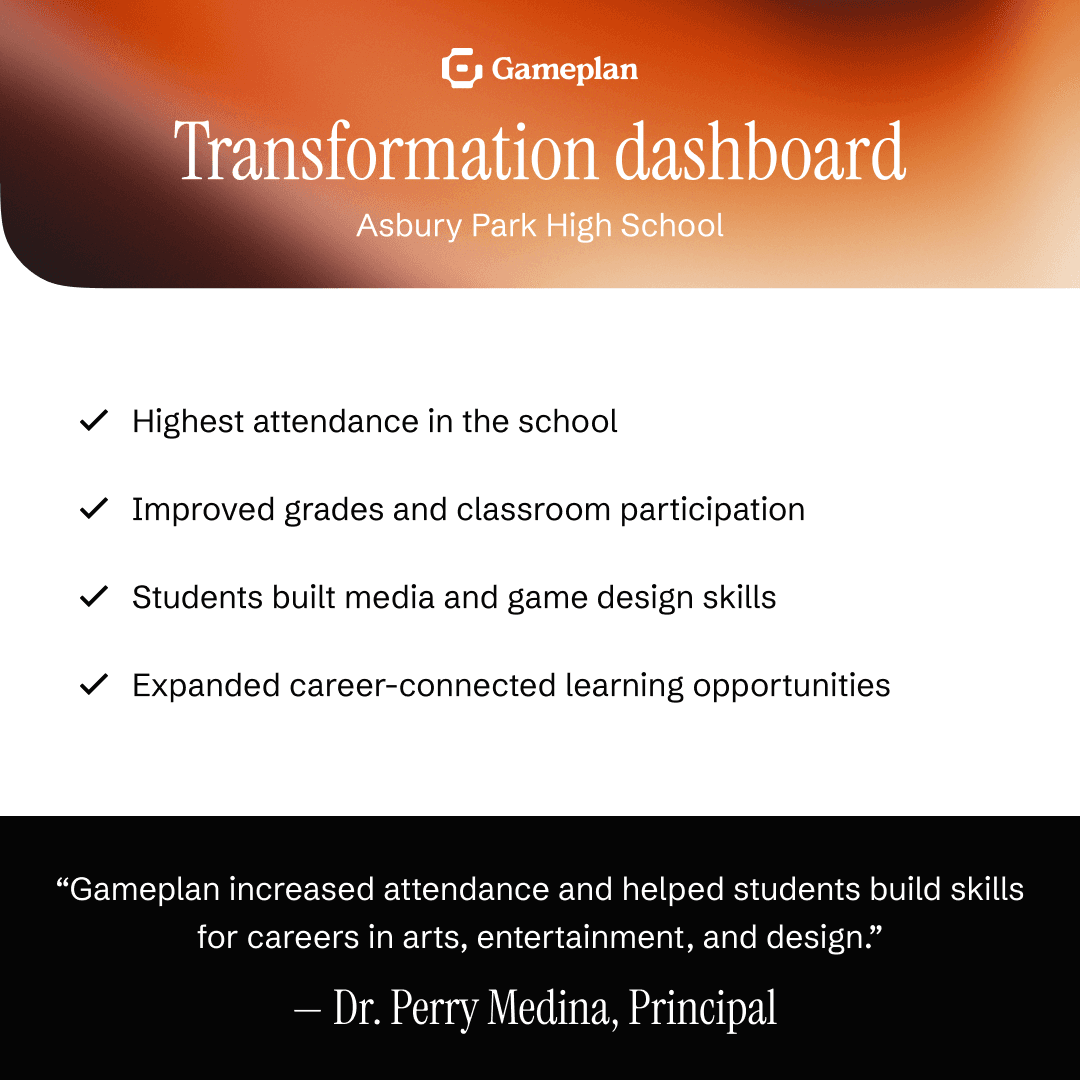
According to Dr. Medina, Careers in Gaming consistently maintained some of the strongest attendance in the school, with both course sections performing above the school average.
Teachers also observed:
Improved classroom participation
Better focus and engagement
Stronger student motivation
Better classroom behavior
Increased enthusiasm for school
David noted that students began looking forward to the course and carried that motivation into other parts of the school day.
“Students are engaged. We’ve seen improvements in attendance, behavior, and skill development, and it gives them something to look forward to.” - David Wronko, Social Studies Teacher
The results align with broader findings from New Jersey scholastic esports and Gameplan programs, where participating schools regained instructional time and improved attendance outcomes through career-connected engagement strategies.
The school is now thinking beyond a single course and exploring longer-term pathways connected to game design, media production, and creative technology careers.
For students at Asbury Park, these pathways now feel real, visible, and attainable.
Takeaways for CTE and workforce readiness
Career-connected learning improves attendance
When students see a connection between school and their future, engagement changes. Careers in Gaming became one of the highest-attendance courses in the building because students found the learning meaningful and relevant.
Non-technical teachers can successfully implement the program
David Wronko had no gaming or technical background. Gameplan’s structure, pacing, and teacher-ready resources helped him confidently launch and teach the course.
Workforce-ready skills matter
Students developed communication, teamwork, creativity, leadership, and problem-solving skills that apply directly to future college and workplace environments.
Local industry connections make learning more tangible
The nearby Netflix studio helped students see media and creative technology careers as realistic opportunities within their own region.
Cross-curricular learning strengthens engagement
The Tuskegee Airmen project showed how career-connected curriculum can support deeper engagement across history, communication, creativity, and collaboration.
Ready to build career pathways that work?
Gameplan helps schools bring career-connected learning into the classroom through courses in game design, media production, cybersecurity, and career exploration.
With teacher-ready curriculum, workforce-aligned pathways, and flexible implementation models, schools can create meaningful learning experiences that improve engagement while preparing students for future opportunities.
Schedule a meeting to explore pathway options, implementation, and workforce-ready learning opportunities for your school or district.
FAQ
How does Asbury Park High School use Gameplan?
Asbury Park High School uses Gameplan through Careers in Gaming. Students explore game design, media production, digital systems, Unreal Engine, communication, teamwork, and career skills.
What results has Asbury Park seen with Gameplan?
The school reported the strongest attendance in the building for Careers in Gaming. Students in the Gameplan sections also showed attendance above the school average, along with stronger grades, behavior, focus, and motivation.
Why did Asbury Park choose Gameplan?
Asbury Park chose Gameplan because it offered a broad curriculum, alignment with New Jersey learning standards, teacher-ready structure, and a strong connection to career readiness.
What skills do students build with Gameplan?
Students build teamwork, public speaking, communication, creativity, confidence, problem-solving, and digital skills connected to game design, media production, and future careers.
How does Gameplan support workforce readiness?
Gameplan helps students connect their interests to career pathways. At Asbury Park, students use Careers in Gaming to explore media, game design, digital systems, and creative technology skills tied to future work.
What careers do Careers in Gaming support?
The course introduces students to careers in game design, media production, digital communication, streaming, content creation, cybersecurity, and creative technology industries.
Can teachers without technical experience use Gameplan?
Yes. Gameplan is designed with teacher-ready curriculum, pacing guides, and structured lessons that support educators regardless of technical background.
What skills do students learn?
Students build communication, teamwork, leadership, creativity, public speaking, problem-solving, and technical skills through collaborative projects and hands-on learning.
Does Gameplan align with CTE pathways?
Yes. Gameplan courses align with CTE pathways and workforce-ready learning objectives in areas like media production, game design, cybersecurity, and digital technology.
Can Gameplan support attendance initiatives?
Yes. Schools using Gameplan and scholastic esports programs have reported measurable improvements in attendance and student engagement.
Written by
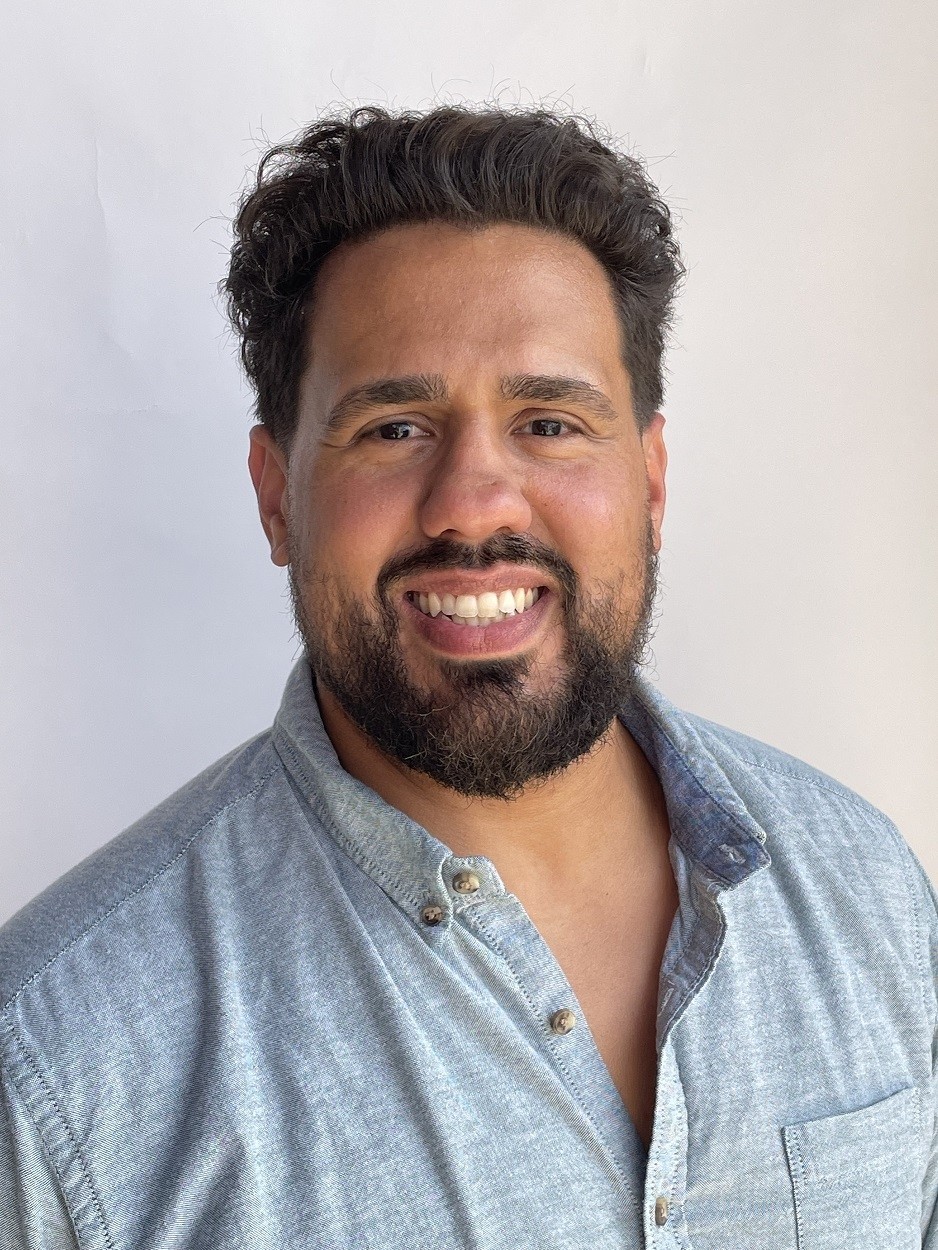
Chris Aviles
Chris Aviles is the Product Evangelist at Gameplan and the founder of Garden State Esports. A passionate educator and pioneer in scholastic esports, Chris has revolutionized the educational landscape by integrating esports into schools. His book, The Esports Education Playbook: Empowering Every Learner Through Inclusive Gaming, reflects his commitment to using gaming to enhance student engagement and learning. Under his leadership, GSE has become the largest scholastic esports league in the U.S., fostering teamwork, leadership, and inclusivity among students. At Gameplan, Chris continues to advance his mission of expanding esports opportunities in education.