

Teaching Unreal Engine in High School: How Compton Built a CTE-Aligned Game Development Pathway
Summary
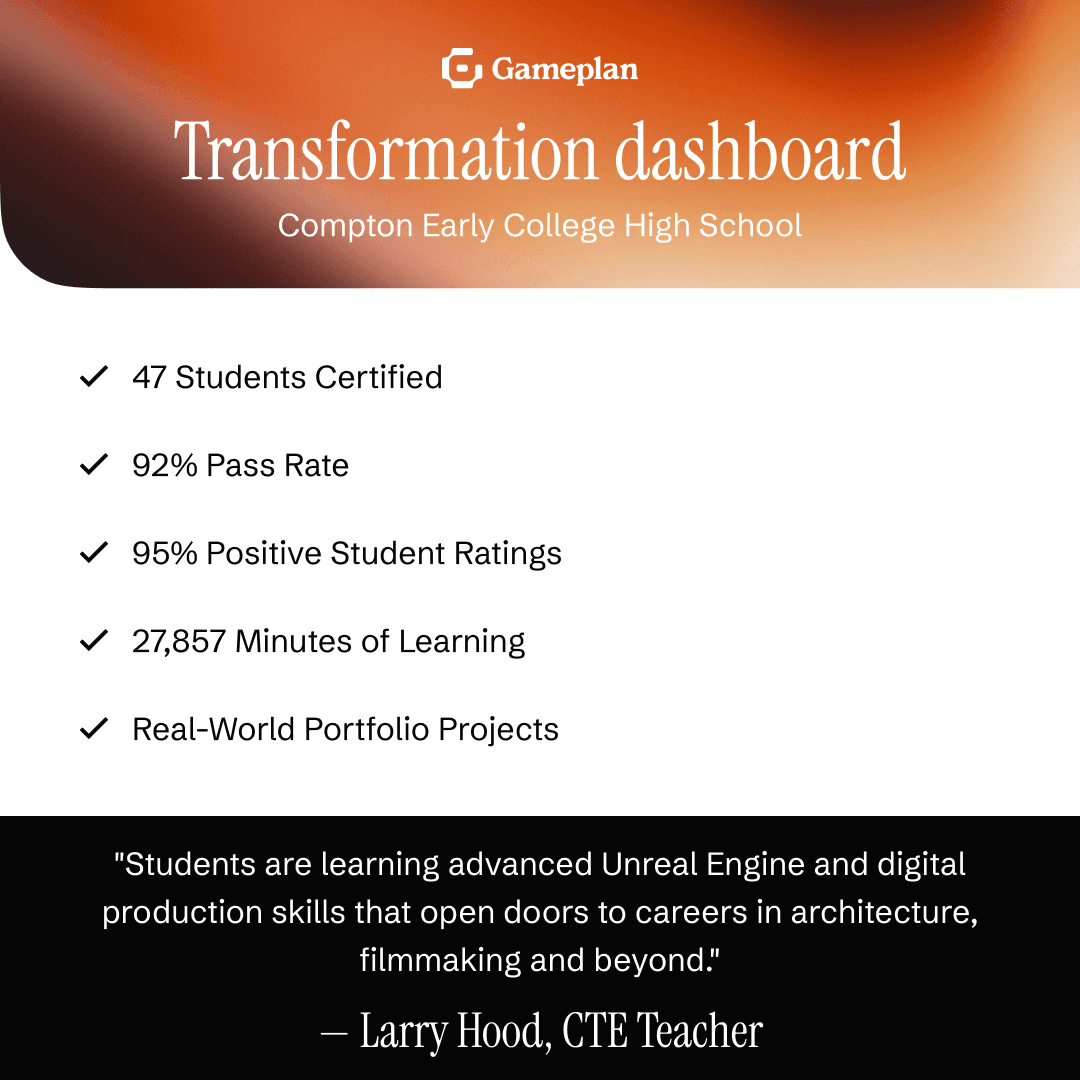
Compton Early College High School wanted a more structured way to teach game design with Unreal Engine. After adopting Gameplan's Game Design Fundamentals course, teacher Larry Hood was able to streamline instruction, support different learning styles, and prepare students for certification. The result was a 92% pass rate on the Unreal Engine 3D Fundamentals certification exam, with 47 students earning the credential while building portfolio-ready projects and career-ready technical skills.
Location: Compton, California | Grades: 9-12 | Type: High School | Size: 550
Compton Early College High School is a public high school in Compton, California, serving students in grades 9 through 12.
The school's Game Development program is led by Larry Hood, a Career and Technical Education teacher who teaches Game Design, AP Computer Science, and Esports. Students progress through a multi-course pathway that includes Game Design 1, Game Design 2, and a pathway completer experience that culminates in industry certification.
The program was designed to help students build technical skills, complete authentic projects, and explore careers connected to game development, digital production and interactive media.
Meet the Teacher Behind Compton's Game Development Pathway
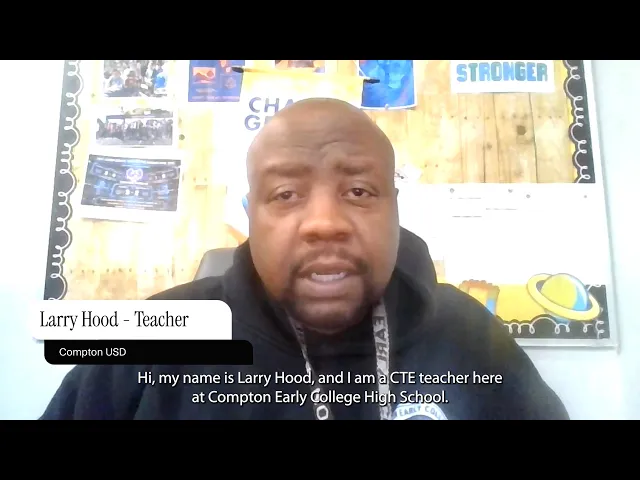
Larry Hood has spent years teaching game design and computer science. Before adopting Gameplan, he relied on a combination of Unreal Engine textbooks, Epic Games resources, and community-created content.
While the materials were valuable, they were spread across multiple sources and required significant effort to organize into a consistent learning experience.
"When I started looking at the content, I said, this is a perfect fit. It was identical to what I was teaching. It had great videos and great content."
The curriculum matched his existing goals while providing the structure, pacing, assessments, and certification pathway his students needed.
Impact Spotlight
The Challenge: Game Design Without a Structured Curriculum
Before Gameplan, Larry was teaching Unreal Engine using a collection of resources gathered from different places.
He used Epic Games materials, community-created lessons, and a textbook recommended through an Epic Games accelerator program. While those resources helped him build a program, they created challenges in day-to-day instruction.
"I couldn't really run the class with fidelity. I had to use different resources and not all of them were geared toward beginning students."
The pace of Unreal Engine updates also made it difficult to keep textbooks current. Students often encountered content that no longer matched the latest version of the software.
Larry needed a structured curriculum that could support beginners, provide consistent instruction, and help students progress through the pathway without requiring him to constantly rebuild lessons.
Why Compton Chose Gameplan
Larry Hood first encountered Gameplan through his district's initiative. While exploring the platform, he discovered the Game Design Fundamentals.
"I realized they had game design content, and I'm teaching Unreal Engine. When I started looking at it, I knew it was a perfect fit."
The course aligned closely with what he was already teaching while adding features that simplified instruction.
The built-in LMS, pacing tools, gradebook, and calendar gave him more flexibility to organize content around his schedule. Since students did not meet every day, the ability to quickly adjust lessons and timelines became especially valuable.
"It was easy to modify the calendar based on what I needed from week to week."
Building a Complete Game Development Pathway
Compton uses Gameplan across multiple levels of its game development pathway.
Students begin with foundational concepts before progressing into more advanced Unreal Engine work. Students continue building multiple skills before attempting certification.
Students learn how to:
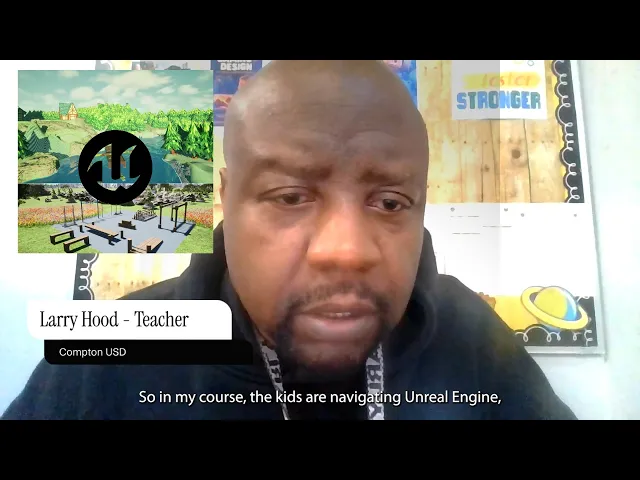
Navigate Unreal Engine
Work in 3D environments
Design levels and player experiences
Create materials and textures
Build environments and worlds
Use lighting and camera systems
Understand player movement and collision
Develop blueprint scripting fundamentals
Test, revise, and improve projects
Alongside technical skills, students develop professional habits such as teamwork, file management, project presentation, and collaboration.
"The content was exactly what I needed for the course."
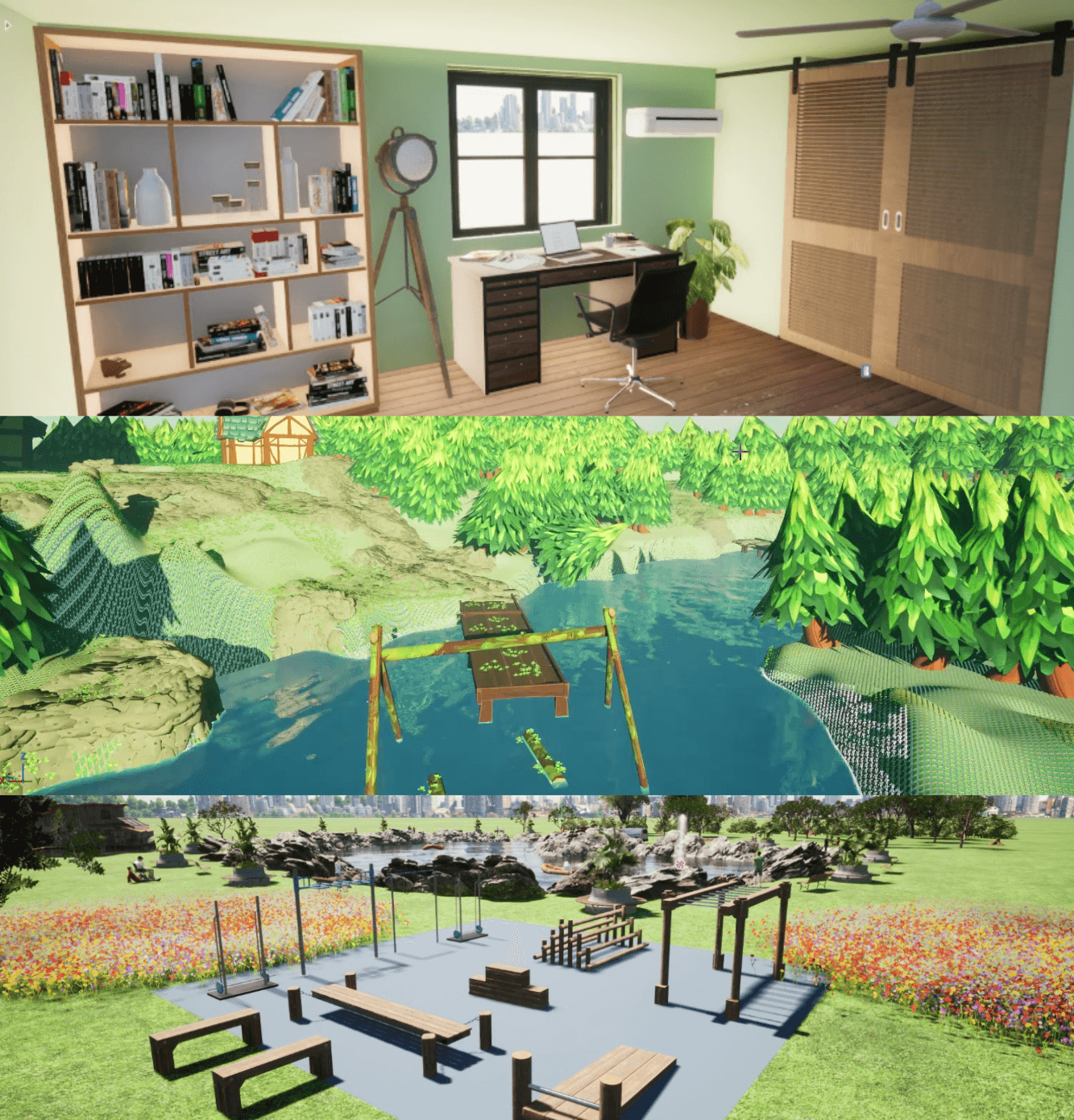
One of the strongest parts of the pathway is that students leave with work they can show.
Students begin with foundational design projects that help them connect ideas with execution. In one assignment, students sketch an environment on paper before recreating it in Unreal Engine as a fully realized 3D space.
As they progress, projects become increasingly sophisticated.
Students create:
Ideal Room designs that transform concepts into detailed 3D environments
Ideal Park projects that expand those ideas into larger interactive spaces
World-building environments using terrain sculpting, foliage systems, lighting, and environmental storytelling
Village and landscape projects that demonstrate advanced world creation workflows
Playable levels featuring checkpoints, collectibles, player movement, and environmental challenges
Rube Goldberg machines that combine creativity, engineering concepts, and interactive design
The progression is visible in student work. What begins as a sketch evolves into a playable environment built with professional tools used across game development, architecture, simulation, and digital production.
Results for Students: Unreal Engine Certification and Career-Ready Skills
Certification Success: Forty-seven students earned the Unreal Engine 3D Fundamentals certification, with pathway completers achieving a 92% pass rate.
Technical Skill Development: Students learned how to navigate Unreal Engine, work in 3D environments, build levels, create materials and textures, use lighting systems, and develop interactive experiences.
Portfolio-Ready Projects: Students created projects including Ideal Rooms, Ideal Parks, world-building environments, Rube Goldberg machines, and playable game levels that demonstrated both technical and creative growth.
Differentiated Learning: Self-directed learners could move through videos and lessons at their own pace, while students who needed additional support had access to guided instruction and supplemental resources.
Student Leadership: Students who progressed more quickly often became classroom leaders, helping classmates solve problems and navigate projects.
Career-Ready Skills: Through collaborative projects, students developed communication, teamwork, project management, presentation, testing, and iteration skills.
Career Exploration: Students gained exposure to industries beyond game development, including architecture, filmmaking, simulation, and digital production.
Results for Teachers
For Larry Hood, Gameplan reduced the amount of time spent searching for content and organizing resources. Instead of piecing together lessons from multiple sources, he had access to a structured curriculum aligned with his pathway goals.
The platform's flexibility also allowed him to adapt pacing and scheduling to meet the needs of his students. Students could move ahead when ready, while he focused more attention on learners who needed additional support.
That shift gave him more time to teach, coach, and support project work.
"It's opening doors to many different pathways, and I'm already seeing more teachers become interested and engaged."
Why This Story Matters
Many schools want to offer game development and creative technology pathways, but struggle with the same challenges Compton faced.
They have student interest but lack curriculum.
They have software but no pathway.
They have teachers who are willing to learn but need structure and support.
Compton shows what happens when those pieces come together.
Students progressed through a multi-year pathway, built original projects, earned industry credentials, and developed skills that extend beyond game development into broader creative and technical careers. The result was not just a successful course.
It was a sustainable game development pathway with measurable outcomes.
Bring Unreal Engine and Game Development to Your Students
Gameplan helps schools launch and expand career pathways in game development, media production, cybersecurity, and offers career exploration paths for middle schools.
With teacher-ready curriculum, industry certifications, and flexible implementation, schools can create engaging learning experiences that prepare students for future careers.
Schedule a meeting to learn more.
FAQ
What certification did Compton students earn?
Students earned the Unreal Engine 3D Fundamentals certification after completing the pathway and passing the certification exam.
What was the certification pass rate?
Pathway completers achieved a 92% certification pass rate, with 47 students earning the credential.
What grade levels participated?
The program serves students in grades 9 through 12.
What projects do students create?
Students create room designs, park designs, world-building environments, Rube Goldberg machines, interactive levels, and portfolio projects using Unreal Engine.
What skills do students learn?
Students learn level design, world building, lighting, materials, player movement, blueprint scripting, testing, iteration, teamwork, file management, and project presentation.
Can students with different experience levels succeed?
Yes. The program supports both self-directed learners and students who need more guided instruction, allowing teachers to differentiate learning while maintaining a consistent curriculum.
What is a Game Development Pathway?
A Game Development Pathway is a sequence of courses that teaches students game design, development, world building, interactive media, and technical production skills while preparing them for future education and careers.
Written by

Garrett Nato
Garrett Nato is a Partnership Manager at Gameplan. He holds a Bachelor of Applied Business Management and a Master of Philosophy & Theology. He has worked in education technology for 5 years and aims to turn students’ passions into purpose by improving student outcomes, building CTE pathways, and advancing workforce readiness. His career reflects a commitment to equipping students with the skills and qualities needed to flourish in any academic or professional endeavor they set out on. As a major advocate for play, Garrett understands the importance of games and story in building creative individuals that are built for adversity.